Proper waste management is crucial for maintaining a healthy and functional home. Homeowners often face the decision of choosing between a septic system and a sewer system. This choice can significantly impact your property, finances, and even the environment. Understanding the differences between these systems, along with their benefits and drawbacks, can help you make an informed decision that suits your needs and preferences.
Septic Systems
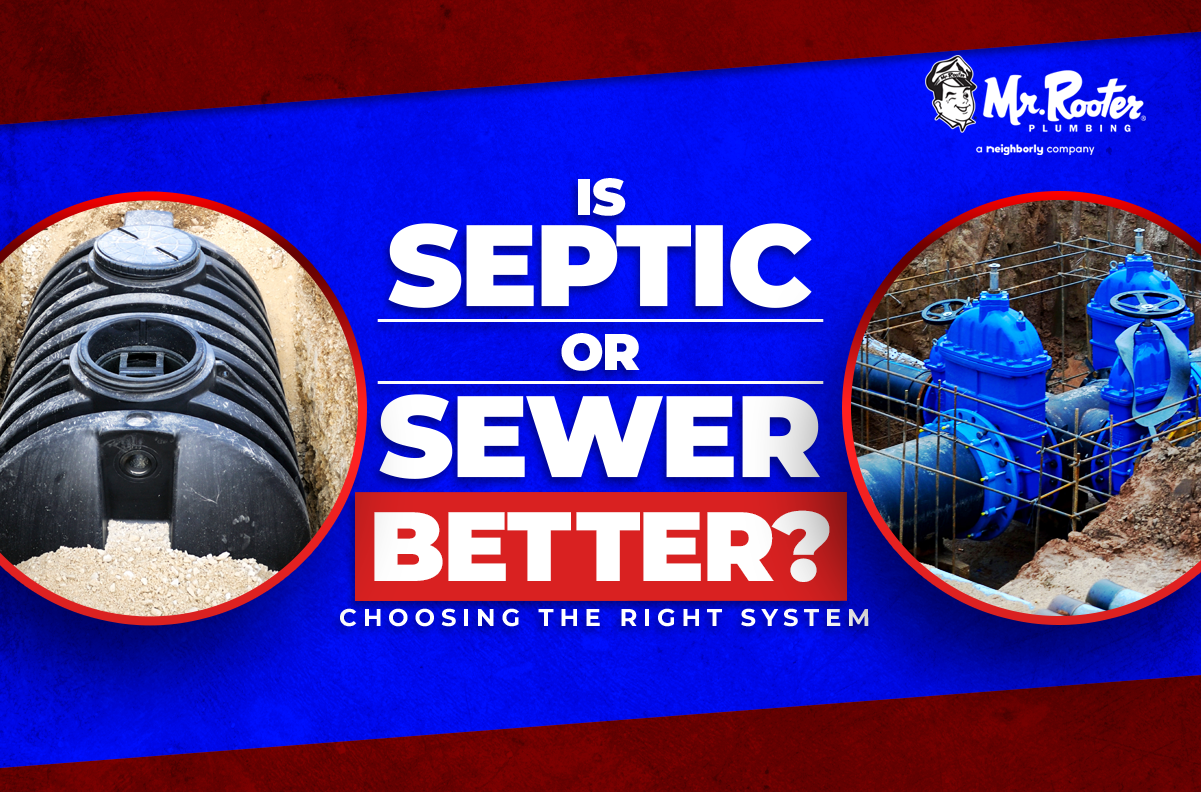
A septic system is an independent wastewater treatment system commonly used in rural areas or properties not connected to municipal sewer lines. It consists of a septic tank and a drain field. Wastewater flows from the home into the septic tank, where solids settle to the bottom, and liquids pass into the drain field for natural filtration and absorption into the soil.
Sewer Systems
Sewer systems are centralized waste management systems managed by local municipalities. Wastewater from homes and businesses is transported through a network of underground pipes to a central treatment plant. Here, the water undergoes extensive treatment processes to remove contaminants before being released into the environment or reused.
How They Work
Septic Systems: Wastewater enters the septic tank, where solids separate from liquids. Bacteria break down organic matter, and the liquid effluent flows into the drain field for natural filtration.
Sewer Systems: Wastewater travels through a series of pipes to a municipal treatment plant. The treatment process involves several stages, including physical, chemical, and biological treatments, to ensure the water is safe for discharge or reuse.
💡Prefer control or convenience? Septic systems offer hands-on management, while sewer systems provide ease with minimal effort. Choose what fits your lifestyle.
Differences Between Septic and Sewer Systems
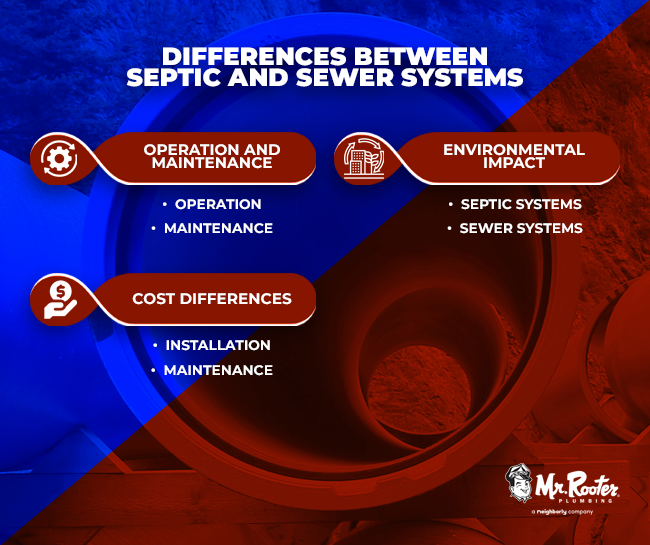
Choosing between a septic and sewer system involves understanding their key differences in operation, maintenance, environmental impact, and costs. Here’s a brief comparison to help you decide.
Operation and Maintenance
- Operation: Septic systems work independently on your property, while sewer systems are part of a municipal network.
- Maintenance: Septic systems need regular maintenance, including pumping every 3-5 years. Sewer systems require less individual upkeep, as the municipality handles most maintenance tasks.
Environmental Impact
- Septic Systems: When maintained properly, they can be eco-friendly, utilizing natural filtration. Poor maintenance, however, can lead to groundwater contamination.
- Sewer Systems: Designed for large volumes of wastewater with rigorous treatment processes, but improper management can cause environmental issues like overflows or leaks.
Cost Differences
- Installation: Septic systems can cost between $3,000 to $10,000, depending on conditions and size. Sewer connection fees and installation costs can be lower but vary by location.
- Maintenance: Septic systems incur costs for regular pumping and potential repairs. Sewer systems involve ongoing monthly utility fees.
💡 Understanding septic and sewer systems is crucial for making informed choices about costs, maintenance, and environmental impact. This knowledge ensures the chosen option fits specific property needs and lifestyle preferences effectively.
Septic Systems
| Benefits Septic Systems | Drawbacks Septic Systems |
| Works without relying on municipal systems. | Requires pumping every 3-5 years. |
| Lower long-term costs compared to monthly sewer fees. | Poor maintenance can lead to contamination. |
| Uses natural filtration, benefiting the environment when maintained properly. | Not suitable for all soil types or property sizes. |
Sewer Systems
| Benefits Sewer Systems | Drawbacks Sewer Systems |
| Minimal maintenance for homeowners. | Ongoing utility fees. |
| Eliminates the need for regular pumping. | Potential for system overflows or backups. |
| Supports larger households and businesses. | Relies on municipal infrastructure quality. |
Is Septic or Sewer Better? Factors to Consider
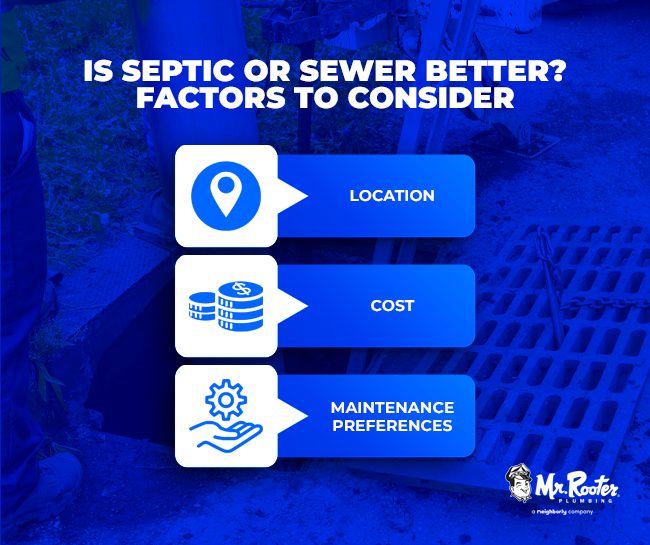
When deciding between a septic or sewer system, consider the following factors:
- Location: Rural or remote areas may not have access to municipal sewer lines, making septic systems the only option.
- Cost: Evaluate the initial installation costs versus long-term utility fees and maintenance expenses.
- Maintenance Preferences: Determine your willingness and ability to manage regular septic system maintenance versus relying on municipal services.
Choosing between a septic and sewer system depends on various factors, including location, costs, and maintenance preferences. Both systems have their benefits and drawbacks, and the best choice for your property will depend on your specific needs and circumstances. Assess these factors carefully to make an informed decision that ensures effective and sustainable waste management for your home.