Have you ever heard strange popping noises coming from your water heater? If so, you’re not alone. Many homeowners experience this unsettling sound, and it often leads to concerns about potential damage or safety hazards. Understanding why your water heater is making these noises and knowing how to address the issue promptly can save you time, money, and stress. In this guide, we’ll explore the common causes of water heater popping noises, assess whether they’re dangerous, and provide actionable solutions to fix and prevent them.
What Causes Water Heater Popping Noises?
Water heater popping noises are typically caused by sediment buildup at the bottom of the tank. Over time, minerals like calcium and magnesium from hard water settle at the bottom, forming a layer of sediment. When the water heater’s heating elements are active, they heat the water trapped beneath this sediment, causing it to boil and produce steam bubbles that escape with a popping sound.
Common Causes:
- Sediment Buildup: The most common culprit, as minerals in the water supply settle and create a barrier between the heating element and the water.
- Water Hardness: Areas with hard water experience more rapid sediment accumulation.
- Old Water Heaters: Older models are more prone to sediment buildup due to prolonged exposure to minerals in the water.
💡 Knowing why your water heater makes popping noises helps you avoid expensive repairs. The noises are caused by mineral buildup, which makes the water boil and pop. Regular cleaning keeps it running smoothly.
Is a Popping Water Heater Dangerous?
Hearing your water heater pop can be alarming, but it’s not always a sign of immediate danger. However, it’s essential to understand the potential risks and take appropriate action.
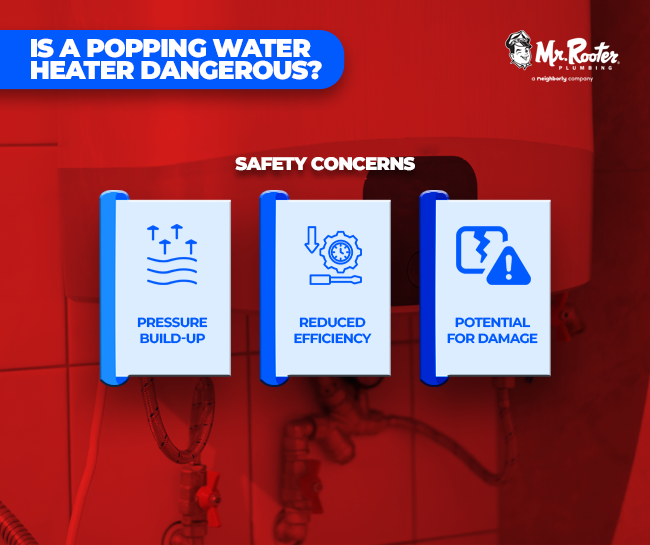
Safety Concerns:
- Pressure Build-Up: If sediment buildup is excessive, it can cause increased pressure in the tank, which may lead to leaks or even tank rupture in extreme cases.
- Reduced Efficiency: Sediment layers act as an insulator, making the water heater work harder and less efficiently, potentially shortening its lifespan.
- Potential for Damage: Continuous popping noises indicate a need for maintenance, which, if ignored, could lead to costly repairs or replacement.
💡While a popping water heater isn’t immediately dangerous, neglecting the problem can lead to more significant issues down the line. Therefore, it’s crucial to address it promptly.
How to Fix Popping Noises in Your Water Heater
Step-by-Step Guide to Flushing the Water Heater
- Turn Off the Water Heater:
- Electric Water Heater: Switch off the power at the circuit breaker.
- Gas Water Heater: Turn the thermostat to the “pilot” setting.
- Turn Off the Cold Water Supply: Locate the cold water valve on top of the heater and turn it off to stop water flow.
- Attach a Garden Hose to the Drain Valve: Connect one end of a garden hose to the drain valve at the bottom of the tank and place the other end in a suitable drainage area.
- Open the Drain Valve: Allow the water to flow out, flushing the sediment from the tank. Be cautious as the water may be hot.
- Flush the Tank: Once the tank is empty, briefly turn on the cold water supply to stir up any remaining sediment. Continue flushing until the water runs clear.
- Close the Drain Valve and Refill the Tank: Close the drain valve, remove the hose, and turn the cold water supply back on. Allow the tank to fill completely.
- Restore Power/Gas Supply: Once the tank is full, turn the power back on for an electric heater or reset the thermostat for a gas heater.
When to Call a Professional
If the popping noises persist after flushing the tank or if you’re uncomfortable performing the maintenance yourself, it’s best to contact a professional plumber. Persistent noise may indicate more complex issues that require expert diagnosis and repair.
Preventing Future Popping Noises
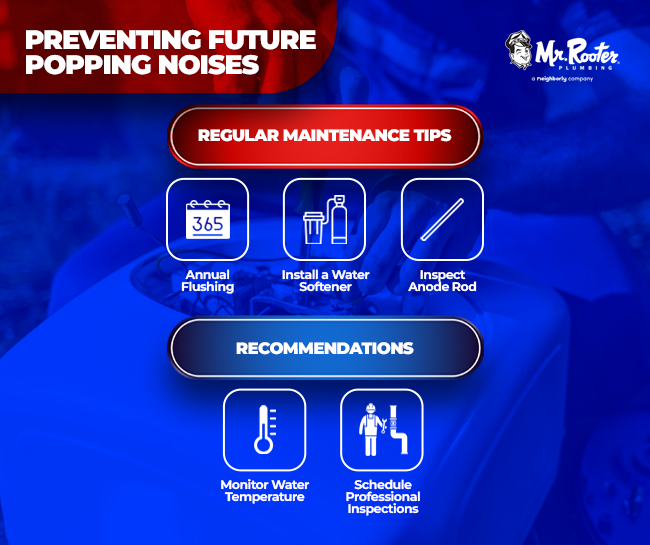
Regular Maintenance Tips:
- Annual Flushing: Regularly flush your water heater at least once a year to prevent sediment buildup.
- Install a Water Softener: If you live in an area with hard water, consider installing a water softener to reduce mineral deposits.
- Inspect Anode Rod: Check the anode rod every few years and replace it if it’s significantly corroded to help prevent tank corrosion.
Recommendations:
- Monitor Water Temperature: Keep the thermostat at a safe and efficient temperature (usually around 120°F).
- Schedule Professional Inspections: Have a professional inspect your water heater periodically to ensure it’s in good working condition.
Water heater popping noises are a common issue that can be addressed with proper maintenance and care. By understanding the causes and following the steps to fix and prevent sediment buildup, you can ensure your water heater operates efficiently and safely. Remember to perform regular maintenance and consult a professional if the issue persists. Taking these proactive measures will help extend the lifespan of your water heater and maintain a comfortable home environment.