Water quality is a crucial aspect of home maintenance that often goes unnoticed until issues arise. One common solution to poor water quality is installing a water softener. But what exactly is a water softener, and why might you need one? This guide aims to inform homeowners about the benefits and considerations of installing a water softener, helping you decide if it’s the right choice for your home.
What Does a Water Softener Do?
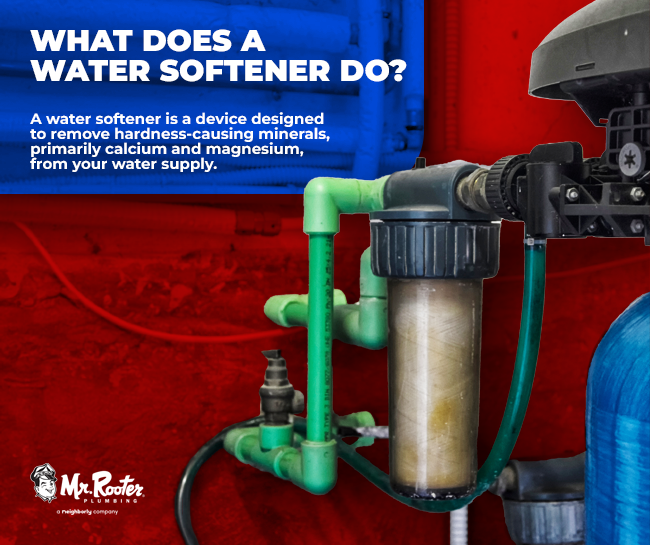
A water softener is a device designed to remove hardness-causing minerals, primarily calcium and magnesium, from your water supply. Hard water, which contains high levels of these minerals, can cause a variety of problems in your home. Water softeners use a process called ion exchange, where hard water passes through a tank filled with resin beads that attract and trap calcium and magnesium ions, replacing them with sodium or potassium ions.
Hard Water: Contains high levels of dissolved minerals like calcium and magnesium, which can lead to scale buildup in pipes, reduce the efficiency of water heaters, and cause soap to lather poorly.
Soft Water: Free from these minerals, soft water prevents scale buildup, enhances the efficiency of soaps and detergents, and improves the overall quality of water in your home.
Benefits of a Water Softener
Installing a water softener offers several advantages that can improve your household’s overall quality of life:
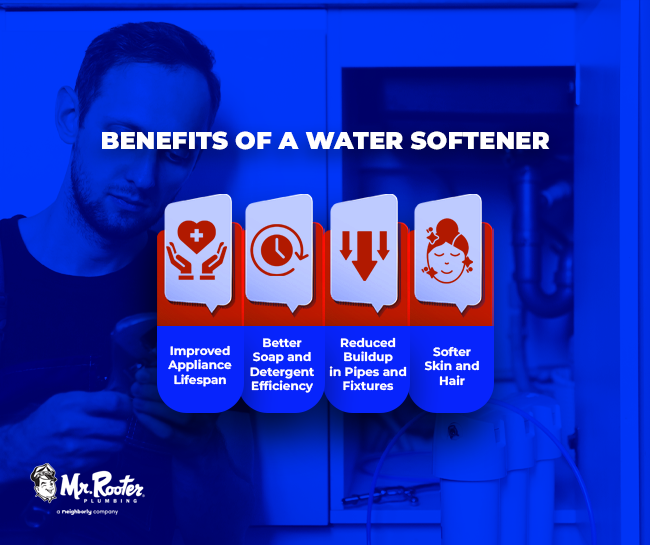
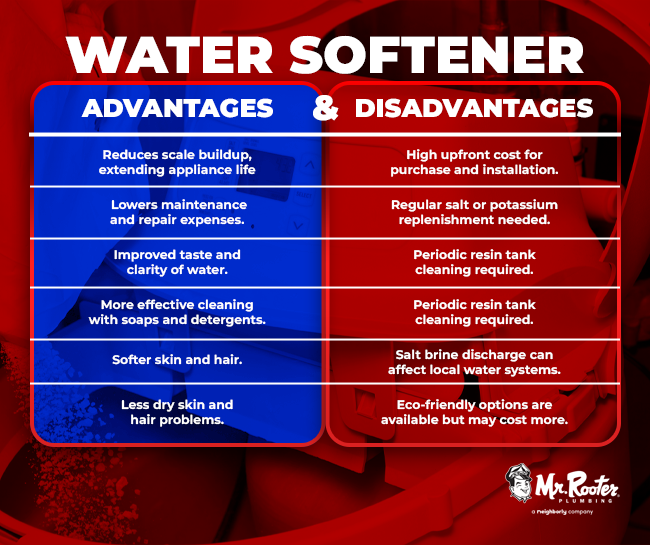
- Improved Appliance Lifespan: Soft water prevents the buildup of mineral deposits in appliances like dishwashers, washing machines, and water heaters, extending their lifespan and reducing maintenance costs.
- Better Soap and Detergent Efficiency: Soft water enhances the effectiveness of soaps and detergents, meaning you can use less product for the same results. This leads to savings on cleaning supplies and improved cleanliness.
- Reduced Buildup in Pipes and Fixtures: By eliminating scale deposits, soft water helps maintain clear, efficient plumbing systems, reducing the likelihood of clogs and corrosion.
- Softer Skin and Hair: Hard water can leave your skin dry and hair brittle. Soft water, on the other hand, is gentler, leaving your skin feeling smoother and hair more manageable.
💡 By reducing mineral buildup, water softeners help extend the lifespan of appliances and plumbing systems, saving money on repairs and maintenance. Additionally, soft water improves cleaning efficiency and enhances personal care by leaving skin and hair softer.
Water Softener Advantages and Disadvantages
When to Consider a Water Softener
Certain signs and factors indicate it might be time to invest in a water softener:
- Frequent scale buildup on faucets and showerheads.
- Reduced water flow due to clogged pipes.
- Shortened lifespan of appliances like water heaters and dishwashers.
- Dry skin and dull hair after bathing.
Conduct a simple water hardness test using a home test kit or contact a local water quality expert. Hardness is typically measured in grains per gallon (gpg) or milligrams per liter (mg/L).
💡 Hard water is more common in certain regions. Research your area’s water quality or consult with neighbors to determine if hard water is a common issue in your community.
Deciding whether to install a water softener involves considering the specific needs and circumstances of your household. By understanding the benefits, drawbacks, and practical aspects of water softeners, you can make an informed decision that enhances your home’s water quality and overall comfort.