Choosing the right material for your plumbing or construction project is not just about meeting the current needs; it’s about ensuring longevity, safety, and cost-effectiveness. With various materials available, homeowners and commercial space owners often find themselves weighing options, particularly between cast iron and carbon steel pipes. This guide aims to shed light on these materials, helping you make an informed decision based on their properties, applications, and implications for health and safety.
What is Carbon Steel Pipe?
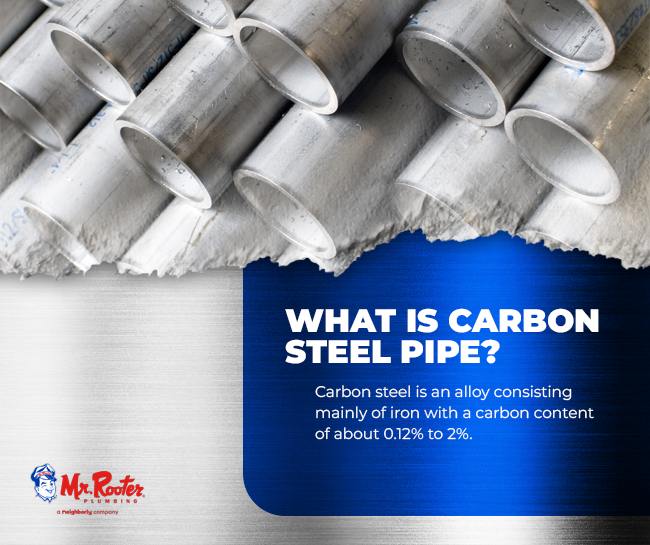
Carbon steel pipe is a widely used material in the plumbing and construction industries. Known for its strength and durability, carbon steel is an alloy consisting mainly of iron with a carbon content of about 0.12% to 2%. This range allows for different grades of carbon steel, each suited to various applications due to differences in strength, ductility, and resistance to corrosion.
Advantages:
- High strength, enabling thinner pipe walls and reduced material costs.
- Good ductility, facilitating easy shaping and welding.
- Compatibility with high-pressure applications.
Disadvantages:
- Prone to corrosion when exposed to moisture, requiring protective coatings.
- Not suitable for all types of drinking water applications due to potential leaching.
What is Cast Iron Pipe?
Cast iron pipe, a traditional choice for plumbing and drainage systems, is known for its longevity and robustness. Made by casting iron, these pipes are larger and thicker than their carbon steel counterparts, offering unique benefits and challenges.
💡 Cast iron pipes are durable and long-lasting in plumbing, typically used underground. They resist abrasion, dampen noise, and often outlast buildings.
Benefits:
- Exceptional durability, often lasting over a century with proper maintenance.
- Natural resistance to corrosion, making it ideal for sewer and outdoor applications.
- Excellent sound suppression for waste water flow.
Drawbacks:
- Heavy and difficult to install, requiring specialized fittings.
- Brittle nature makes it more susceptible to cracking under stress.
Key Differences Between Cast Iron and Carbon Steel Pipes
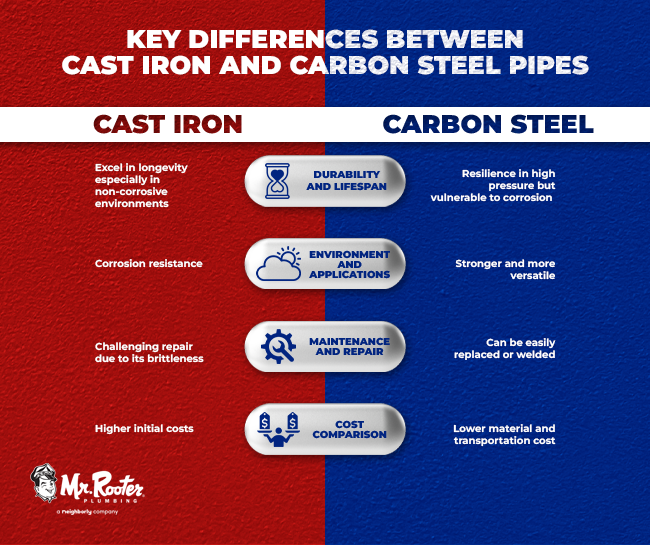
When deciding between cast iron and carbon steel pipes, several factors come into play:
- Durability and Lifespan: Cast iron pipes excel in longevity, especially in non-corrosive environments, while carbon steel is preferred for its resilience in high-pressure situations but may require more maintenance to prevent corrosion.
- Environment and Applications: Cast iron is the material of choice for underground water mains and drainage due to its corrosion resistance. Carbon steel, being stronger and more versatile, is favored in industrial applications and where water pressure and temperature vary.
- Maintenance and Repair: Repairing cast iron can be more challenging due to its brittleness. Carbon steel pipes, however, can be more easily welded or replaced, offering a somewhat simpler maintenance process.
- Cost Comparison: Initial costs for cast iron pipes can be higher, given their weight and the complexity of installation. Carbon steel pipes may offer a more cost-effective solution with their lower material and transportation costs.
Safety and Health Considerations
Safety and health considerations are paramount when selecting pipe materials, especially for drinking water systems. Carbon steel pipes, while durable, may not always be the best choice for drinking water due to potential corrosion and metal leaching concerns. On the other hand, cast iron pipes, although generally safe, require careful consideration of their internal coating to prevent lead contamination.
Decision-Making Guide for Homeowners and Commercial Space Owners

Choosing between cast iron and carbon steel pipes involves considering the project’s specific needs:
- Application: Determine whether the pipe will be used for drainage, potable water, or high-pressure industrial applications.
- Environment: Assess the environmental conditions, such as soil type and moisture levels, which can affect the pipe’s longevity.
- Budget: Consider both initial installation and long-term maintenance costs.
- Professional Advice: Consult with a plumbing or construction professional to understand the best options for your project.
In the debate between cast iron vs carbon steel pipes, both materials have their place in construction and plumbing projects, each offering distinct advantages and considerations. By understanding the differences, homeowners and commercial space owners can make informed decisions that align with their project requirements and long-term objectives. For specific concerns or projects, always consult with a professional to ensure the best outcomes.