As a responsible pet owner, you’re probably well aware of the need to properly dispose of your dog’s waste. However, the question of whether you can flush dog poop down the toilet often arises. Proper disposal of dog waste is not only a matter of maintaining cleanliness but also of protecting the environment and ensuring the functionality of your home’s plumbing system. In this guide, we will explore the best practices for getting rid of dog poop, including the potential risks of flushing it down the toilet and alternative, environmentally friendly disposal methods.
Can You Flush Dog Poop Down the Toilet?
Flushing dog poop down the toilet might seem like a convenient option, but it is not without risks. While human waste is treated in municipal sewage systems, dog waste contains different bacteria and parasites that may not be effectively removed during the treatment process. Additionally, dog poop can contribute to plumbing issues.
Potential Risks and Issues:
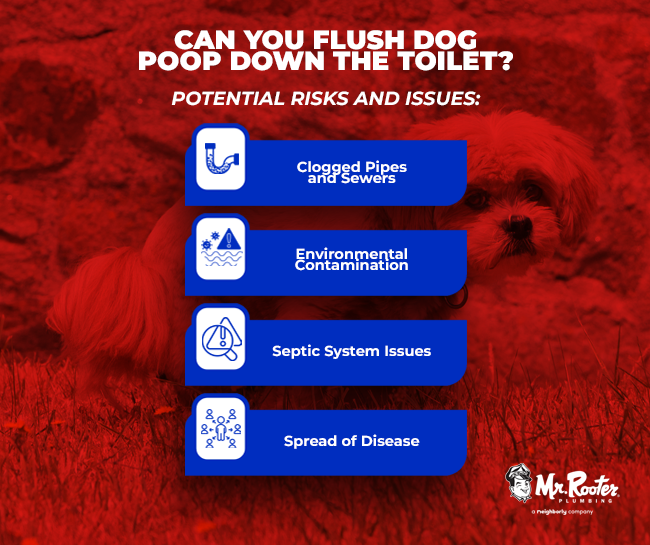
Clogged Pipes and Sewers: Dog poop often contains undigested food, hair, and other materials that can easily clog your home’s plumbing. Over time, these materials can accumulate and contribute to larger blockages in the sewer system, leading to costly repairs.
Environmental Contamination: Even the most advanced wastewater treatment plants may struggle to remove all the harmful bacteria and parasites found in dog feces. Pathogens like E. coli and roundworms can survive the treatment process and enter waterways, posing significant health risks to wildlife and humans.
Septic System Issues: If your home uses a septic system, flushing dog poop can cause severe problems. The solid waste from dog poop can overload the system, leading to blockages, malfunctions, and the need for expensive repairs or replacements.
Spread of Disease: Dog feces can harbor harmful bacteria and parasites, including E. coli and roundworms. These pathogens pose health risks, particularly to children who are more susceptible to infections. Improper disposal can increase the risk of these diseases spreading in your community.
💡 Understanding these issues encourages you to consider the impact of your actions on the environment and community.
Can Dog Poop Clog a Toilet?
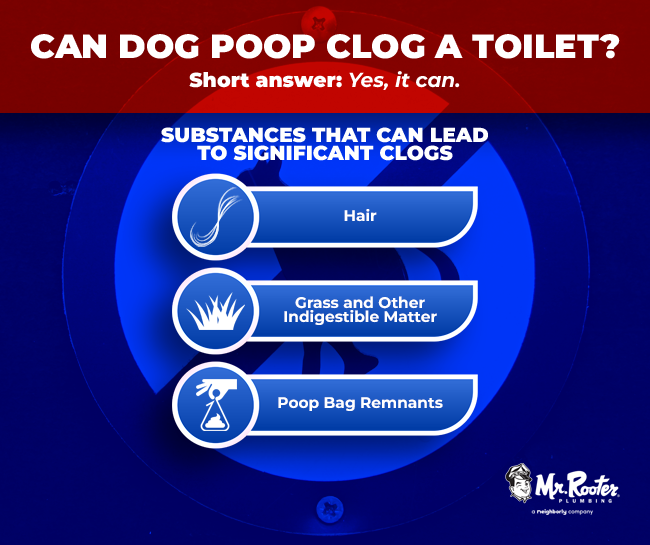
Short answer: Yes, it can.
While dog poop might appear similar to human waste, it often contains substances that can lead to significant clogs in your plumbing system. These substances include:
Hair: Dogs shed, and their hair can end up in their stool. Unlike human waste, this hair does not break down easily and can create blockages in pipes.
Grass and Other Indigestible Matter: If your dog consumes grass or other indigestible items, these can appear in their poop. These materials are not easily processed by your plumbing system and can cause blockages.
Poop Bag Remnants: Flushing dog poop that’s been bagged, even if the bag is labeled as flushable, can lead to clogs. The bag itself, especially if not fully biodegradable, can obstruct pipes and contribute to severe plumbing issues.
💡 To prevent clogs and associated health risks, it’s best to dispose of dog poop in an outdoor trash can rather than flushing it down the toilet. This practice ensures that your plumbing system remains clear and that harmful pathogens do not enter the water supply.
Proper disposal of dog poop is essential for maintaining a clean home, protecting the environment, and ensuring the functionality of your plumbing system. While flushing dog poop down the toilet may seem convenient, it carries significant risks. Instead, consider alternative disposal methods such as bagging and trash disposal, composting, or using specialized dog waste systems. By adopting these practices, you contribute to a healthier environment and a more reliable plumbing system.
Looking for a way to improve your toilet cleaning routine? Learn how to drain the water from your toilet bowl before you start. It’s a quick tip that ensures a cleaner, fresher bathroom.
Click here to read: How to Drain Water from Toilet Bowl for Cleaning