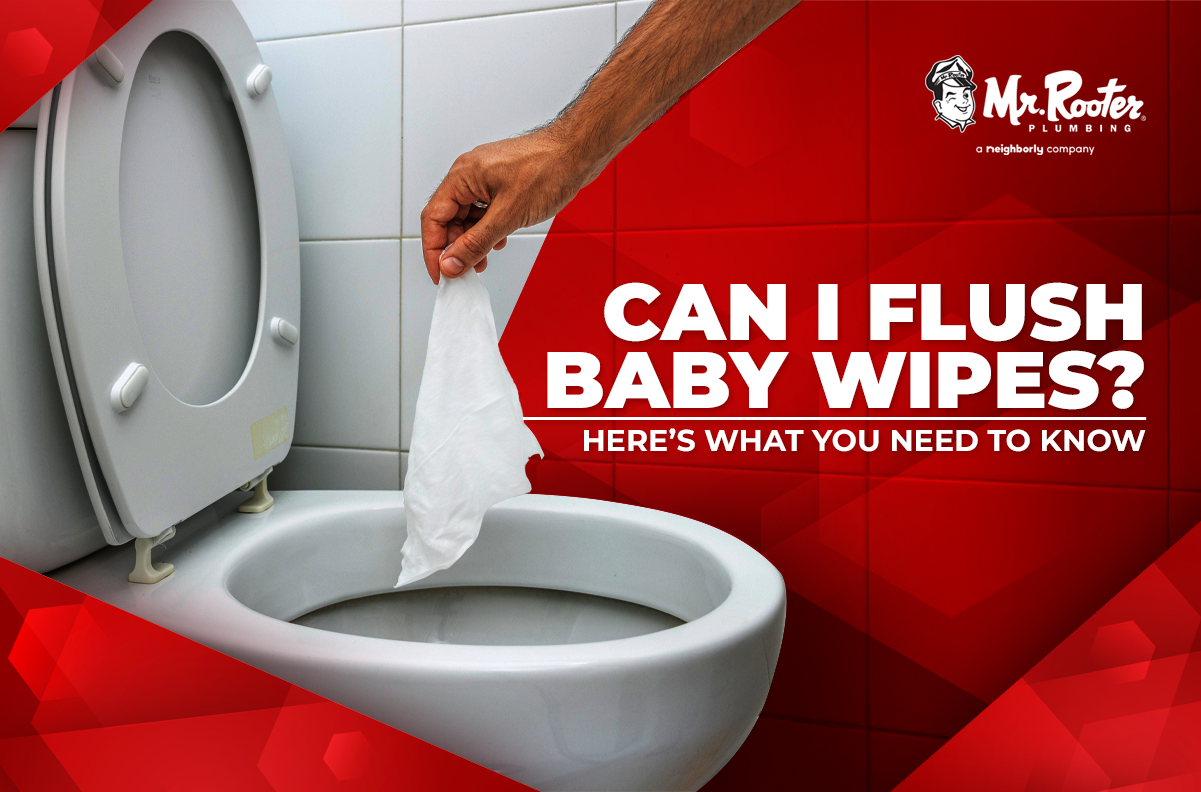
Many people assume that baby wipes—especially those labeled “flushable”—can be safely discarded in the toilet. Unfortunately, this common misconception has led to countless plumbing headaches and environmental issues. Whether you’ve flushed wipes before or are wondering about proper disposal, this guide will help you understand the risks, consequences, and best practices for managing baby wipes.
The Baby Wipes Dilemma
“Can I flush baby wipes?” It’s a question many homeowners ask, especially with the convenience of wipes marketed as “flushable.” While these products might seem harmless, the reality is that most baby wipes do not break down in water the same way toilet paper does.
Flushing wipes can lead to clogged pipes, expensive plumbing repairs, and even broader environmental harm. This guide explains why flushing baby wipes is risky and offers practical tips for proper disposal to protect your plumbing and the planet.
Can You Flush Baby Wipes?
Flushing baby wipes is one of the most common causes of household plumbing issues. While many claims and may suggest wipes are flushable, the reality is much more complicated. Here’s what you need to know:
What Manufacturers Claim
Many brands market wipes as “flushable,” but these claims are often misleading. Flushable wipes are tested in controlled environments, which do not reflect real-world plumbing systems. Even the most “flushable” wipes break down much slower than toilet paper, posing a risk to pipes and septic systems.
The Reality of Flushing Baby Wipes
Flushed wipes often snag on rough areas or bends in your pipes, combining with grease, hair, and other debris to form blockages. Over time, these blockages can grow, causing slow drains, backed-up toilets, or even complete pipe failures.
How Wipes Differ from Toilet Paper
Unlike toilet paper, which disintegrates quickly in water, baby wipes are made with durable fibers like polyester or viscose. These materials are designed to hold up during use but make them incompatible with plumbing systems.
Are There Any Truly Flushable Wipes?
Some wipes are labeled as biodegradable or designed to break down faster than traditional wipes. While they may be marginally safer to flush, even these products can cause issues, particularly in older plumbing or septic systems. Experts recommend avoiding flushing wipes altogether, regardless of labeling.
💡 Understanding the truth about ‘flushable’ wipes can save you from costly plumbing repairs and protect your home’s pipes. Knowledge is your best defense against unnecessary clogs and damage
What Happens When You Flush Baby Wipes?
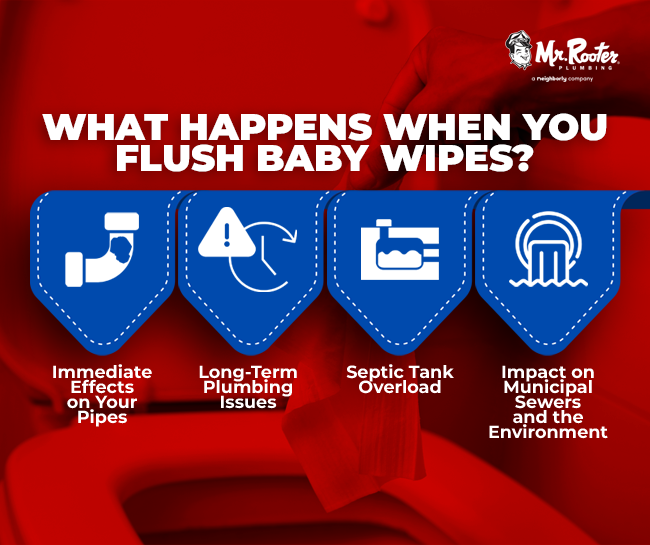
Flushing baby wipes can cause immediate and long-term problems, both for your home and the environment.
- Immediate Effects on Your Pipes
Baby wipes can snag on pipe imperfections or bends, creating obstructions that restrict water flow. A single flushed wipe might seem harmless, but it can quickly snowball into a clog, especially if it catches other debris like grease or hair.
- Long-Term Plumbing Issues
Repeated flushing of wipes can lead to:
- Chronic Blockages: Regular clogs that require frequent plunging or snaking.
- Pipe Damage: Stress caused by clogs can crack or burst pipes, especially in older homes.
- Reduced System Efficiency: Over time, wipes can narrow pipe diameter, slowing drainage and increasing water pressure.
- Septic Tank Overload
For homes with septic systems, wipes do not decompose like toilet paper. Instead, they settle at the bottom of the tank, reducing capacity and necessitating more frequent pumping. In severe cases, wipes can clog the outlet pipe, leading to septic system failure.
- Impact on Municipal Sewers and the Environment
In public sewer systems, flushed wipes often contribute to the formation of “fatbergs”—massive blockages of grease, wipes, and other debris that can cripple sewer lines. These fatbergs are costly to remove and harmful to wastewater treatment processes. Additionally, improperly flushed wipes can escape into waterways, contributing to pollution.
I Accidentally Flushed a Baby Wipe: What Should I Do?
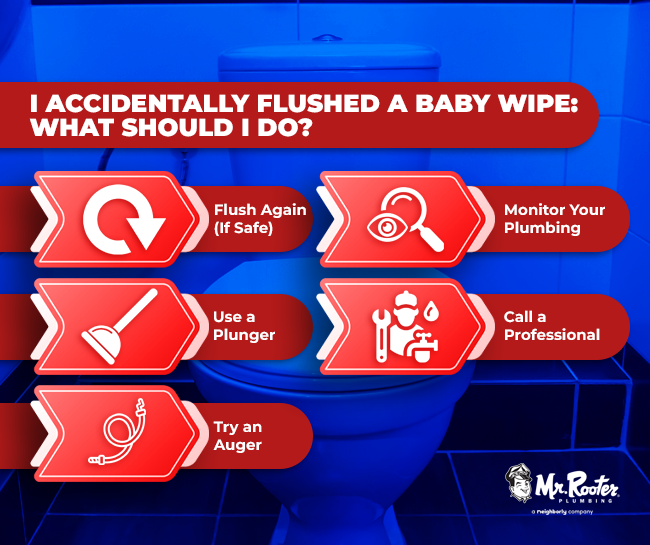
Mistakes happen! If you’ve flushed a baby wipe, here’s how to minimize potential damage:
Flush Again (If Safe)
If you’ve just flushed a wipe and there’s no sign of backup, try flushing again with plenty of water to help push the wipe through.
Use a Plunger
If the toilet begins to back up, a plunger can help dislodge the blockage. Ensure you create a strong seal for the best results.
Try an Auger
A toilet auger (or snake) is more effective than a plunger for deeper blockages. It can help break up or retrieve the wipe without damaging the pipes.
Monitor Your Plumbing
Even if the toilet seems fine, keep an eye on your drains over the next few days. Slow drainage or gurgling sounds could indicate a partial clog.
Call a Professional
If problems persist, it’s best to consult a plumber. They have the tools to safely clear the pipes and inspect for further issues.
💡 Important: Avoid chemical drain cleaners. They’re not effective on wipes and can damage your pipes.
Flushing baby wipes, regardless of their labeling, is not safe for your plumbing or the environment. By adopting proper disposal habits and educating your household, you can prevent costly plumbing problems and contribute to a healthier ecosystem.
The simple step of tossing wipes in the trash instead of the toilet can save you from unnecessary repairs and protect municipal sewer systems. Take action today—because a little effort now can prevent significant headaches in the future
Flushing baby wipes isn’t the only thing that can cause plumbing problems—did you know dog poop can also wreak havoc on your pipes? Learn why flushing pet waste is risky and discover better disposal tips in our blog, Can You Flush Dog Poop Down the Toilet?