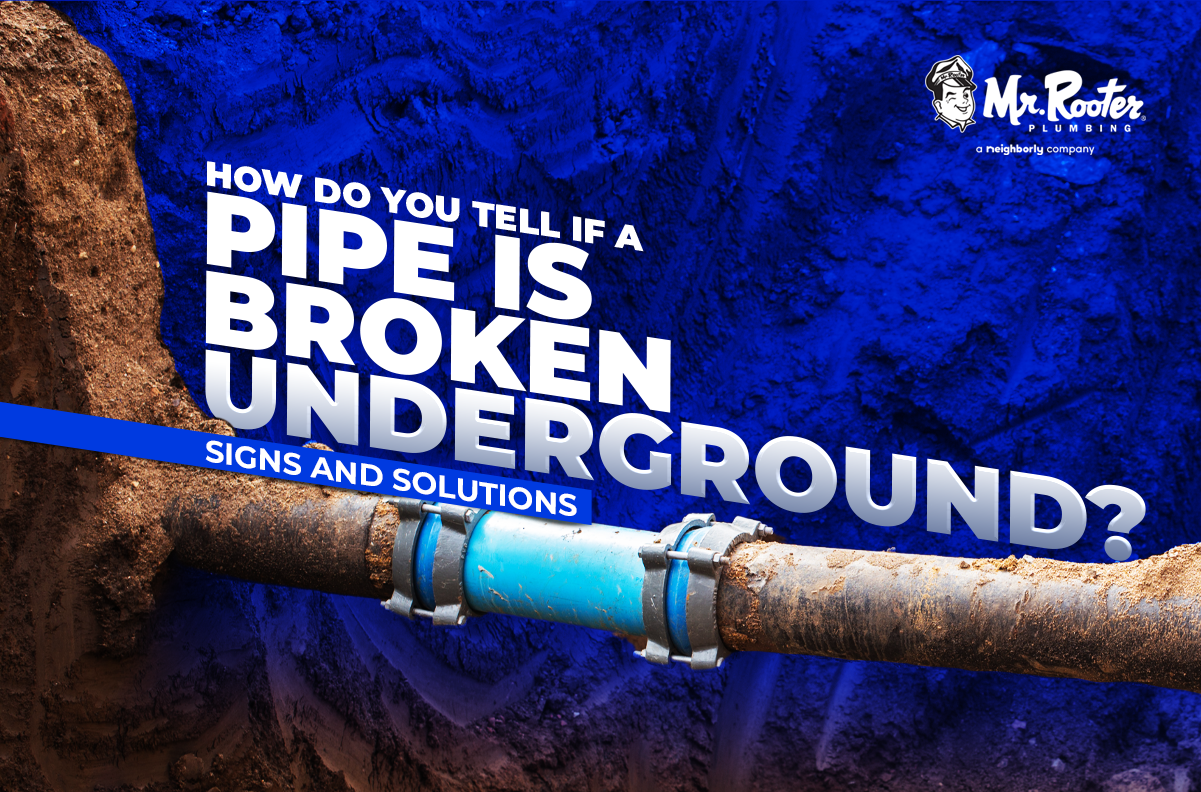
Frozen underground pipes can be a homeowner’s nightmare, especially during the harsh winter months. When temperatures plummet, the water inside pipes can freeze and expand, potentially causing pipes to burst and leading to significant water damage. Addressing frozen pipes promptly is crucial to prevent costly repairs and ensure the continuous flow of water in your home.
In this guide, we’ll walk you through the steps to identify and thaw frozen underground pipes safely. We’ll also cover preventative measures to help you avoid this problem in the future. Whether you’re dealing with a current freeze or looking to protect your home’s plumbing, this comprehensive guide is here to help.
How to Identify Frozen Underground Pipes
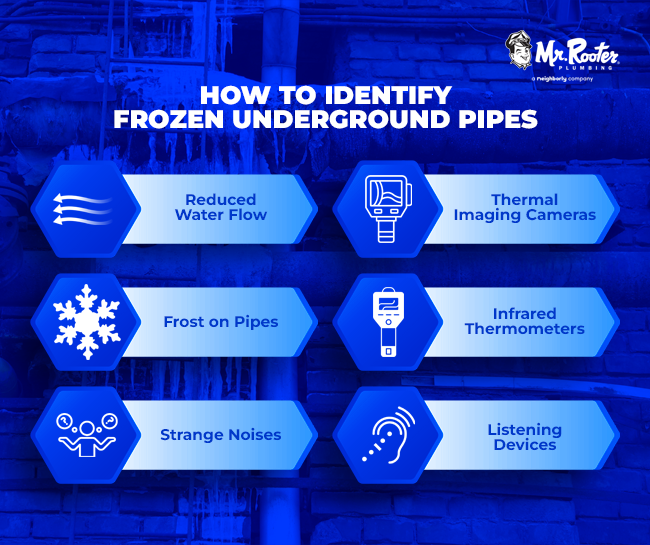
Identifying frozen underground pipes can be challenging but is essential for timely intervention. Here are some signs that your underground pipes may be frozen:
- Reduced Water Flow: A sudden drop in water pressure or no water flow at all can indicate a freeze. This is often one of the first signs homeowners notice.
- Frost on Pipes: Visible frost on exposed sections of pipes leading into the ground can be a clue. If you see frost or condensation on the exterior parts of the pipes, it’s a strong indicator that the pipes underground are frozen.
- Strange Noises: Gurgling or clanking sounds when turning on faucets might point to ice blockages. These noises are caused by the water trying to push past the ice blockages.
- Thermal Imaging Cameras: These can detect cold spots in pipes where the freeze is occurring. This is an advanced tool that provides a visual representation of temperature variations.
- Infrared Thermometers: Useful for measuring the temperature of the pipes above ground. This can help you pinpoint the approximate location of the freeze.
- Listening Devices: Some plumbers use specialized equipment to listen for water flow blockages. These devices can help identify where the ice blockage is located
💡 Regularly checking for frozen pipe indicators supports better maintenance practices, ensuring the plumbing system remains functional and efficient during cold weather.
What to Do If Water Pipes Freeze Underground
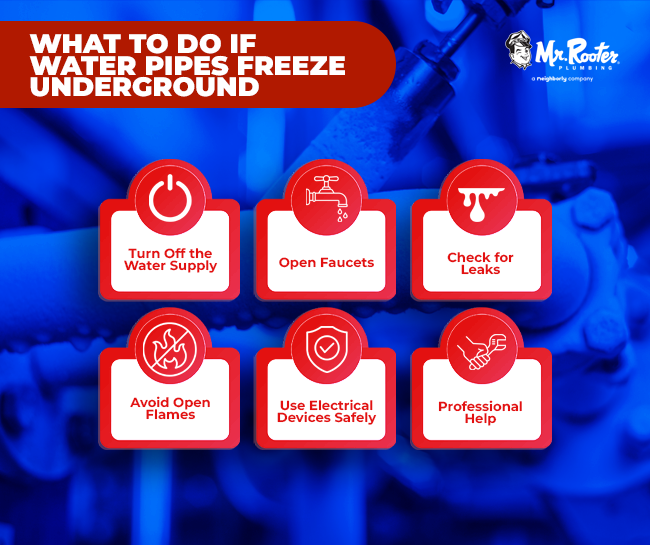
If you suspect your underground pipes are frozen, take these immediate steps to prevent damage and ensure safety:
Turn Off the Water Supply: This prevents potential flooding if the pipe bursts. Locate the main shutoff valve and turn it off to stop the water flow.
Open Faucets: Relieve pressure by opening faucets connected to the frozen pipes. This helps reduce pressure and gives the melting ice somewhere to go.
Check for Leaks: Inspect the area for any signs of leakage or burst pipes. If you notice any water pooling or wet spots, you may have a burst pipe that needs immediate attention.
Avoid Open Flames: Never use a blowtorch or open flame to thaw pipes, as this can cause fire hazards. Additionally, the intense heat can damage the pipes.
Use Electrical Devices Safely: Ensure that any electrical devices used for thawing are suitable for outdoor use and kept away from water. Follow all manufacturer guidelines and safety instructions.
Professional Help: If you’re unsure or uncomfortable, it’s best to call a professional plumber. Professionals have the experience and tools to handle the situation safely.
💡 Acting quickly can reduce the risk of burst pipes and leaks, leading to fewer repairs and less stress. These practical tips make it easy for anyone to manage frozen pipes effectively.
How to Thaw Frozen Pipes Underground
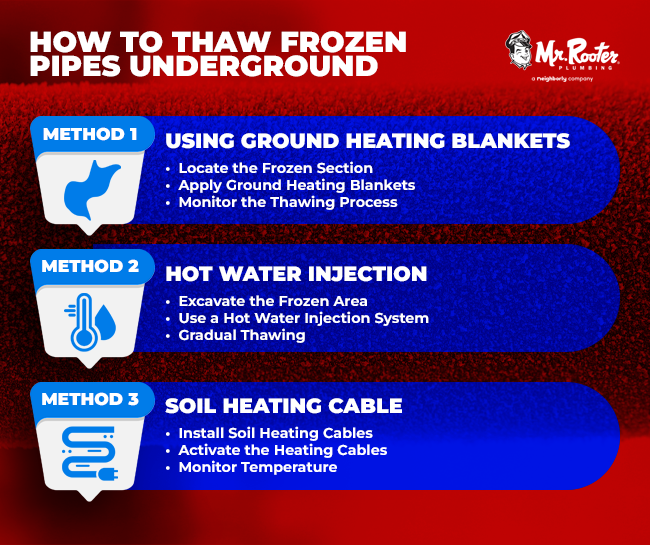
Thawing frozen underground pipes requires careful planning and execution to avoid damaging the pipes. Here are some effective methods organized by their complexity and safety measures:
Method 1: Using Ground Heating Blankets
Locate the Frozen Section:
- Identify the general area where the pipe is frozen. Use thermal imaging cameras or infrared thermometers to pinpoint the freeze.
Apply Ground Heating Blankets:
- Place ground heating blankets over the area where the pipe is frozen. These blankets provide consistent heat to thaw the ground and the pipes beneath.
Monitor the Thawing Process:
- Regularly check the temperature and condition of the ground and pipes. Ensure the heating blankets are working effectively and safely.
Method 2: Hot Water Injection
Excavate the Frozen Area:
- Carefully dig around the area where the pipe is suspected to be frozen. Be cautious not to damage the pipe during excavation.
Use a Hot Water Injection System:
- Inject hot water directly into the frozen section of the pipe using a specialized hot water injection system. This method requires professional equipment and is best handled by a plumber.
Gradual Thawing:
- Allow the hot water to gradually thaw the ice inside the pipe. This process may need to be repeated several times for effective thawing.
Method 3: Soil Heating Cables
Install Soil Heating Cables:
- If you experience frequent freezing, consider installing soil heating cables around your underground pipes. These cables provide continuous heat to prevent freezing.
Activate the Heating Cables:
- Turn on the heating cables during periods of extreme cold to keep the ground and pipes warm.
Monitor Temperature:
- Use temperature sensors to monitor the ground temperature and ensure the heating cables are maintaining a safe and effective temperature.
Preventative Measures to Avoid Frozen Pipes
Preventing pipes from freezing is always better than dealing with the aftermath. Here are some straightforward and effective measures:
- Insulate pipes using foam insulation to cover exposed pipes and keep them warm. Wrap vulnerable pipes with heat tape for added protection.
- Maintain consistent temperature by keeping your home’s thermostat above 55°F, even when you’re away. Open cabinet doors to allow warm air to circulate around pipes, especially under sinks.
- Drip faucets during extremely cold weather to prevent water from freezing in the pipes by keeping a slow drip running.
- Perform seasonal maintenance by draining and shutting off water to outdoor hoses and sprinklers before winter. Seal any cracks or gaps in your home’s foundation and walls to prevent cold air from reaching pipes.
Dealing with frozen underground pipes can be daunting, but with the right knowledge and tools, you can manage and prevent this issue effectively. Remember to act quickly, use safe thawing methods, and implement preventative measures to protect your plumbing during cold weather. Stay proactive to keep your home’s plumbing system running smoothly all year round.
Having issues with cast iron pipes? Our Expert Tips for Repairing Cast Iron Pipes: A Guide offers practical advice to help you maintain and repair these robust but aging pipes. Check it out to extend the life of your plumbing system!