Selecting the right water heater is crucial for any homeowner. Not only does it ensure a constant supply of hot water, but it also impacts energy bills and comfort. A suitable water heater can last a decade or more, so it’s important to make an informed choice that meets your household’s specific needs. In this guide, we’ll explore the essential factors every homeowner should consider when purchasing a water heater, ensuring your investment is sound and satisfactory.
Understanding Different Types of Water Heaters
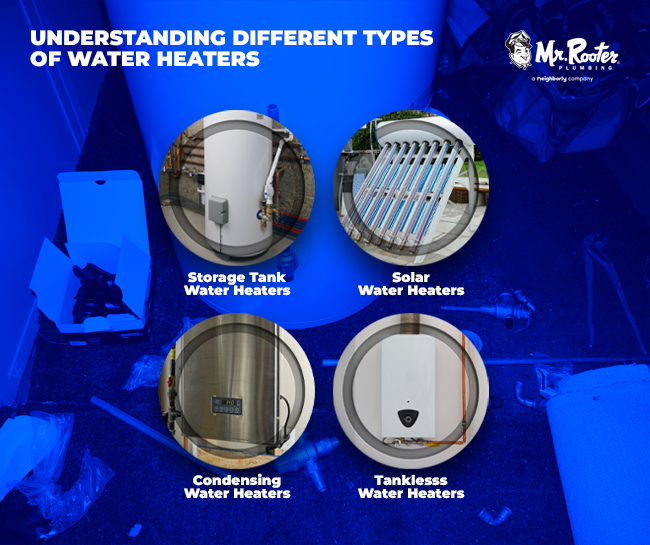
When choosing a water heater, it’s essential to understand the various types available to find the best fit for your home’s needs. Here’s an overview:
- Tankless Water Heaters: These provide hot water on demand without a tank, offering energy savings though at a higher upfront cost.
- Storage Tank Water Heaters: Common and economical, these heaters use a tank to store pre-heated water, available in various fuel types.
- Solar Water Heaters: Utilizing the sun’s power, these are eco-friendly and cost-effective over time, though they require a higher initial investment.
- Condensing Water Heaters: Ideal for homes using natural gas, these heaters are highly efficient, using exhaust gases to heat the water.
What to Look for When Buying a Water Heater
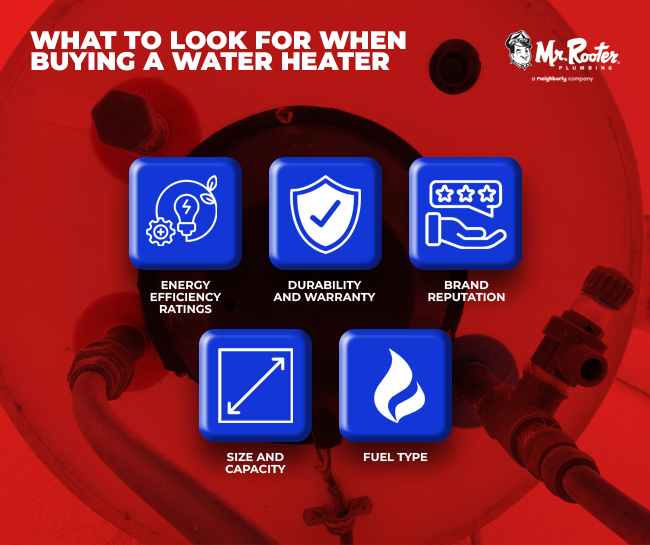
When purchasing a water heater, consider several key factors to ensure you select a reliable, efficient model that meets your household’s specific needs.
Energy Efficiency Ratings
One of the first things to check is the energy efficiency rating of the water heater. Look for models with a high Energy Factor (EF) rating as they use less energy. Newer models often feature improved technology that can significantly lower your home’s overall energy consumption.
Durability and Warranty
A good quality water heater should last between 10 to 15 years. Opt for brands known for their durability and reliability. Also, don’t overlook the warranty—longer warranties often signal a better-quality build.
Brand Reputation
Choosing a reputable brand means you are more likely to have access to better customer support and service options. Research online reviews and customer feedback to gauge brand reputation, which can save you a lot of hassle in the long run.
Size and Capacity:
The right size and capacity of your water heater depend on your household’s peak hot water usage. An undersized water heater will run out of hot water quickly, while an oversized one may lead to wasted energy. Consider your family’s size and peak water usage times when selecting a water heater.
Fuel Type:
The type of fuel your water heater uses will impact both the installation process and long-term operating costs. Options include natural gas, propane, electricity, oil, or solar energy. Each type comes with its benefits and considerations, such as availability, cost, and environmental impact. For instance, solar water heaters offer significant energy savings and environmental benefits but require a higher upfront investment.
💡 By carefully considering these factors, you can ensure that you choose a water heater that provides the best performance and value for your home.
How Sizing Affects Efficiency and Comfort
A water heater that’s too small won’t meet the hot water demands of your household, while one that’s too large will increase your energy bills unnecessarily. The right size depends on the number of occupants and simultaneous usage needs.
Determining the Right Size
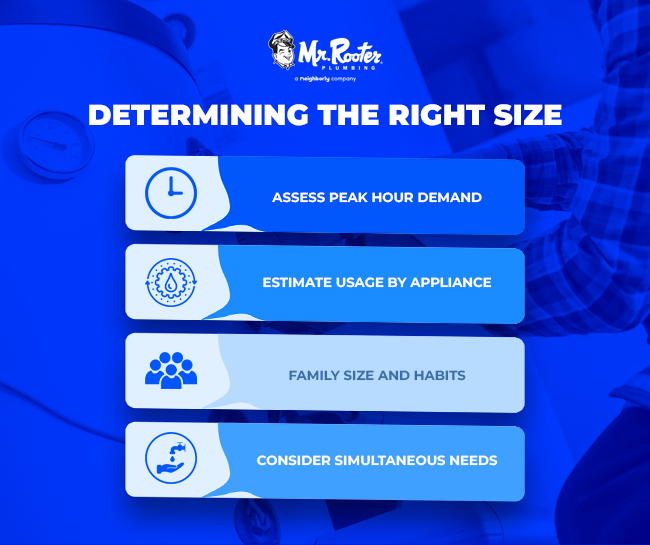
Choosing the right size for your water heater is essential for efficiency and comfort. Here are some tips to help you calculate your household’s needs:
- Assess Peak Hour Demand: Calculate the amount of hot water your household uses during the busiest hour. This includes activities like showering, doing laundry, and running the dishwasher simultaneously.
- Estimate Usage by Appliance: Note the average hot water consumption of each appliance and fixture in your home. For instance, showers typically use about 2-3 gallons per minute, while washing machines may use up to 7 gallons per cycle.
- Family Size and Habits: Consider the number of people in your household and their specific hot water usage habits. Larger families or those with high hot water usage will need a water heater with a larger capacity.
- Consider Simultaneous Needs: Think about times when multiple water-dependent activities occur at once. This will help determine if you need a system with a higher flow rate, especially for tankless models.
💡 The more people in your home, the greater your hot water needs. A single person might be comfortable with a small tank, but a family of four or more will need a significantly larger one.
What Size Water Heater Do I Need For My House?
By following these guidelines, you can select a water heater that adequately meets your household’s hot water needs without wasting energy.
Choosing the right water heater involves understanding different types, considering energy efficiency, assessing size needs, and opting for reputable brands. Taking these factors seriously will ensure you select a unit that fits your household’s demands while providing efficiency and longevity. Remember, this investment is not just about immediate needs but also about long-term satisfaction and cost savings.