Choosing the right size well pump is essential for keeping your water flowing smoothly at home. It’s like finding the perfect fit for your water needs – not too big, not too small, but just right. In this guide, we’ll walk you through the ins and outs of picking the best well pump size for your household. We’ll cover everything from how much water you use every day to the depth of your well, helping you make smart decisions that ensure your water supply is reliable and efficient. So let’s dive in and make sure your well pump is up to the task of keeping your home running smoothly.
Understanding Well Pump Sizing
Understanding well pump sizing is crucial as it varies based on individual needs and factors specific to each well system. Whether you’re installing a new pump or replacing an existing one, having a grasp of the sizing process ensures optimal performance and efficiency for your home’s water supply.
When considering well pump sizing, several critical factors come into play:
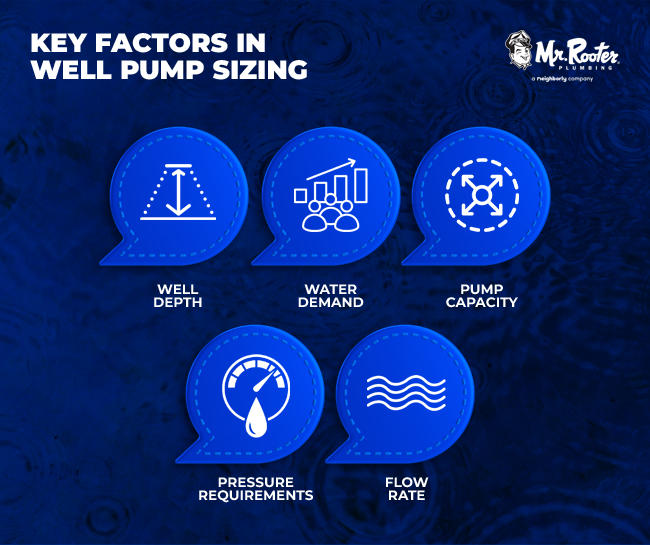
- Well Depth: Deeper wells typically require pumps with higher capacities to lift water efficiently to the surface.
- Water Demand: Factors such as the number of occupants, daily activities, and irrigation needs impact the volume of water required, thereby influencing pump selection.
- Pump Capacity: Matching the pump’s capacity to your well’s yield is essential for efficient operation, optimizing energy usage and prolonging the pump’s lifespan.
- Pressure Requirements: Different fixtures and appliances may require varying levels of pressure, necessitating a pump capable of delivering consistent pressure across the system.
- Flow Rate: Balancing flow rate with pressure requirements ensures adequate water supply for all household activities without sacrificing performance.
💡 By carefully evaluating these factors and consulting with a qualified professional, you can determine the ideal pump size that meets your home’s unique needs.
Can a Pump Be Too Big for a Well?
Installing a pump that’s too big for your well can lead to problems like excessive drawdown and increased energy bills. It’s crucial to match the pump’s capacity to your well’s yield to ensure efficient operation and prevent damage.
Is it Better to Oversize or Undersize a Pump?
When it comes to pump sizing, finding the right balance is key. Oversizing can cause frequent cycling and higher energy costs, while undersizing can lead to inadequate water flow. By considering factors like your well’s characteristics and your household’s needs, you can make the best decision for optimal performance.
Does Well Pump Size Affect Water Pressure?
The size of your well pump directly impacts water pressure in your home. Choosing the right pump size ensures consistent water pressure for activities like showering and washing dishes.
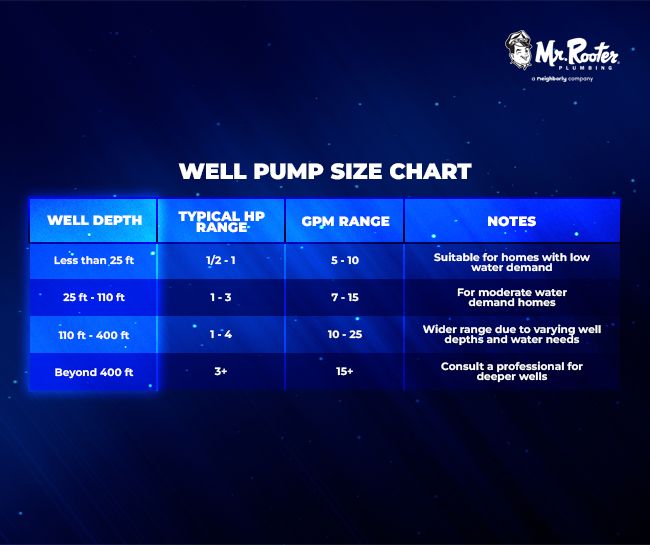
Well Pump Size Chart
For a quick reference, use this chart to help you choose the right pump size based on your well depth and household water usage:
Disadvantages of Incorrect Well Pump Sizing
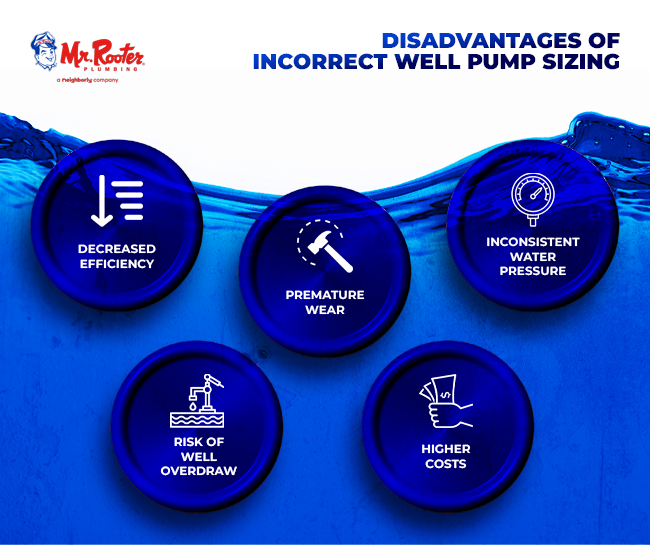
Selecting the wrong well pump size can lead to various drawbacks and disadvantages, impacting both the performance of your water supply system and your overall household experience.
- Decreased Efficiency: Oversized pumps waste energy with excessive cycling, while undersized pumps struggle to meet demand efficiently.
- Premature Wear: Incorrectly sized pumps experience more wear and tear, leading to costly repairs or replacements.
- Inconsistent Water Pressure: Oversized pumps cause pressure fluctuations, while undersized pumps result in inadequate pressure for household needs.
- Risk of Well Overdraw: An oversized pump can deplete the well’s water level, impacting water quality and well structure.
- Higher Costs: Incorrectly sized pumps lead to increased energy consumption and maintenance expenses, adding to operational costs over time.
💡 Did you know well pumps usually last 10-15 years? If yours is within this range and giving trouble, replacing it might be smarter than repairing it, considering repair frequency and overall performance.
Choosing the right well pump size is essential for ensuring your home has a reliable water supply. By considering factors like well depth and household water usage, you can make informed decisions that optimize efficiency and prevent unnecessary expenses. Remember, a properly sized pump system not only improves convenience but also contributes to long-term savings and sustainability for your home.