Tankless water heaters have revolutionized the way we heat water in our homes, offering energy efficiency and endless hot water on demand. However, when it comes to choosing the right type, you need to consider the outdoor vs indoor tankless water heater options. In this comprehensive guide, we’ll delve into the pros and cons of both outdoor and indoor tankless water heaters to help you make an informed decision.
Outdoor vs Indoor Tankless Water Heaters: Which is Right for You?
When deciding between outdoor and indoor tankless water heaters, several factors should influence your choice. Let’s explore these key considerations:
Advantages and Disadvantages of Outdoor Tankless Water Heaters
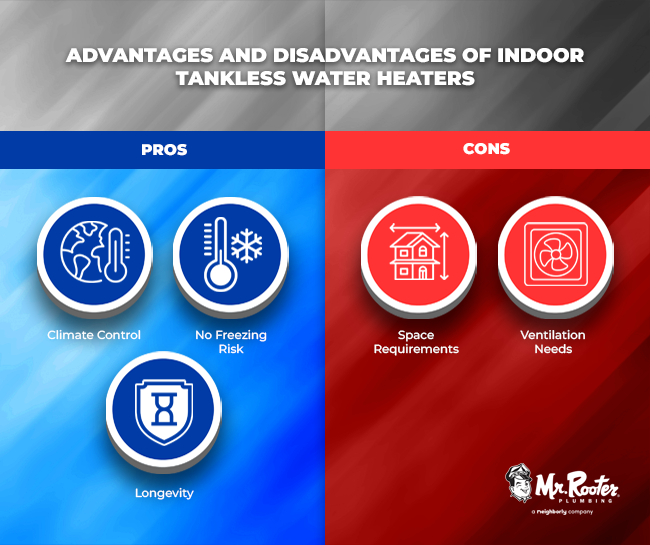
Pros of Outdoor Tankless Water Heaters
Outdoor tankless water heaters offer several advantages:
- Space Saving: Outdoor units free up valuable indoor space, making them ideal for homes with limited room for installation.
- Ventilation: They don’t require complex ventilation systems, which can reduce installation costs.
- Energy Efficiency: Outdoor units eliminate the need for venting, minimizing heat loss and increasing overall energy efficiency.
Cons of Outdoor Tankless Water Heaters
However, there are some drawbacks to consider:
- Exposure to Weather: Outdoor units are exposed to the elements, which can lead to wear and tear over time.
- Freezing Risk: In colder climates, there’s a risk of freezing if not properly insulated or winterized.
Advantages and Disadvantages of Indoor Tankless Water Heaters
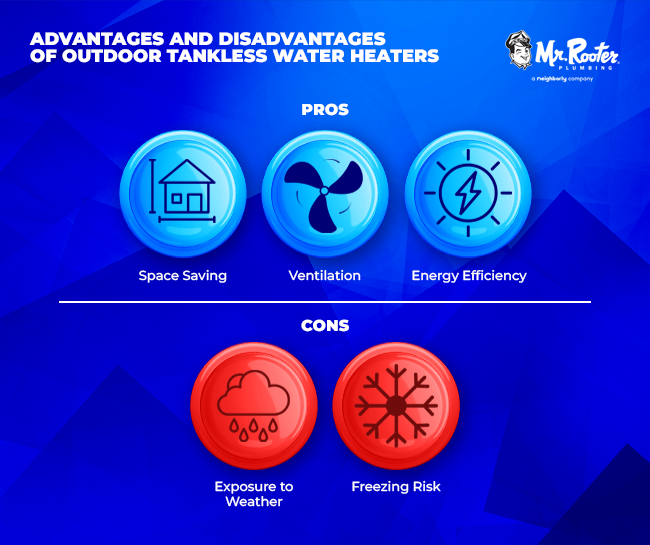
Pros of Indoor Tankless Water Heaters
Indoor tankless water heaters have their own set of advantages:
- Climate Control: They are protected from harsh weather conditions, ensuring consistent performance.
- No Freezing Risk: Indoor units are not susceptible to freezing, making them suitable for colder regions.
- Longevity: Properly maintained indoor units tend to have a longer lifespan due to protection from the elements.
Cons of Indoor Tankless Water Heaters
On the flip side, there are some downsides:
- Space Requirements: They consume indoor space, which can be a limitation for smaller homes.
- Ventilation Needs: Indoor units require proper ventilation, adding complexity and potential installation costs.
Installation and Maintenance
Both outdoor and indoor tankless water heaters come with specific installation and maintenance requirements.
Installation:
- Outdoor Units: Typically, outdoor units are easier to install since they don’t require indoor ventilation systems. However, they should be placed on a stable surface and protected from the direct elements.
- Indoor Units: Indoor units need proper ventilation to expel exhaust gases. Installation may require additional ductwork and space considerations.
Maintenance:
- Outdoor Units: Regular cleaning and protection from debris are essential to maintain outdoor tankless water heaters. Insulation may be necessary in colder climates.
- Indoor Units: Indoor units may require periodic cleaning of the ventilation system and should be inspected for any potential leaks or corrosion.
💡 Understanding the installation and maintenance differences between outdoor and indoor tankless water heaters is crucial for you to make an informed decision. By considering these factors, you can ensure you choose the option that best suits your needs, leading to optimal performance, efficiency, and longevity of the water heater. This ultimately saves you time, money, and hassle in the long run.
Cost Comparison
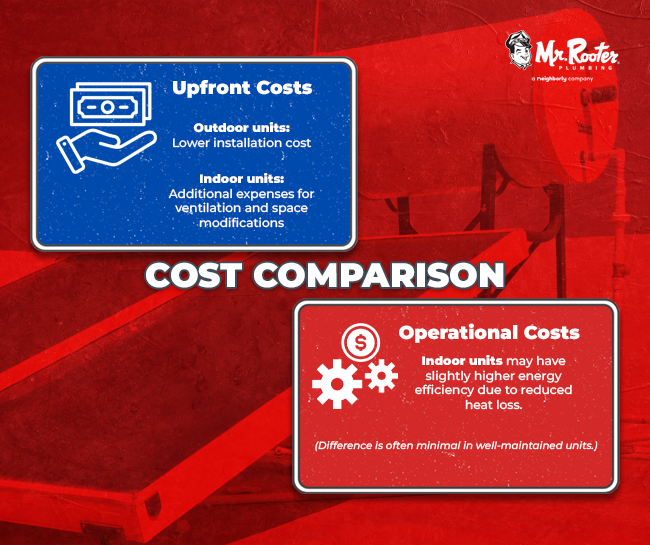
When comparing costs, it’s essential to look at both the upfront and operational expenses:
- Upfront Costs: Outdoor units may have a lower installation cost, while indoor units might require additional expenses for ventilation and space modifications.
- Operational Costs: Indoor units may have slightly higher energy efficiency due to reduced heat loss. However, the difference is often minimal in well-maintained units.
💡By considering both, you can make an informed decision based on your budget and requirements.
Why Choose Outdoor or Indoor Tankless Water Heaters?
To help you make an informed choice, consider specific scenarios:
- Outdoor Tankless Water Heaters: Ideal for homes with limited indoor space, in warmer climates, or where the cost of indoor ventilation is prohibitive.
- Indoor Tankless Water Heaters: Suitable for colder climates, homes with ample indoor space, or where protection from the elements is crucial.
Your decision between an outdoor vs indoor tankless water heater depends on your unique circumstances and preferences. By understanding the advantages and disadvantages of each type, you can select the right water heater to meet your household’s hot water needs.