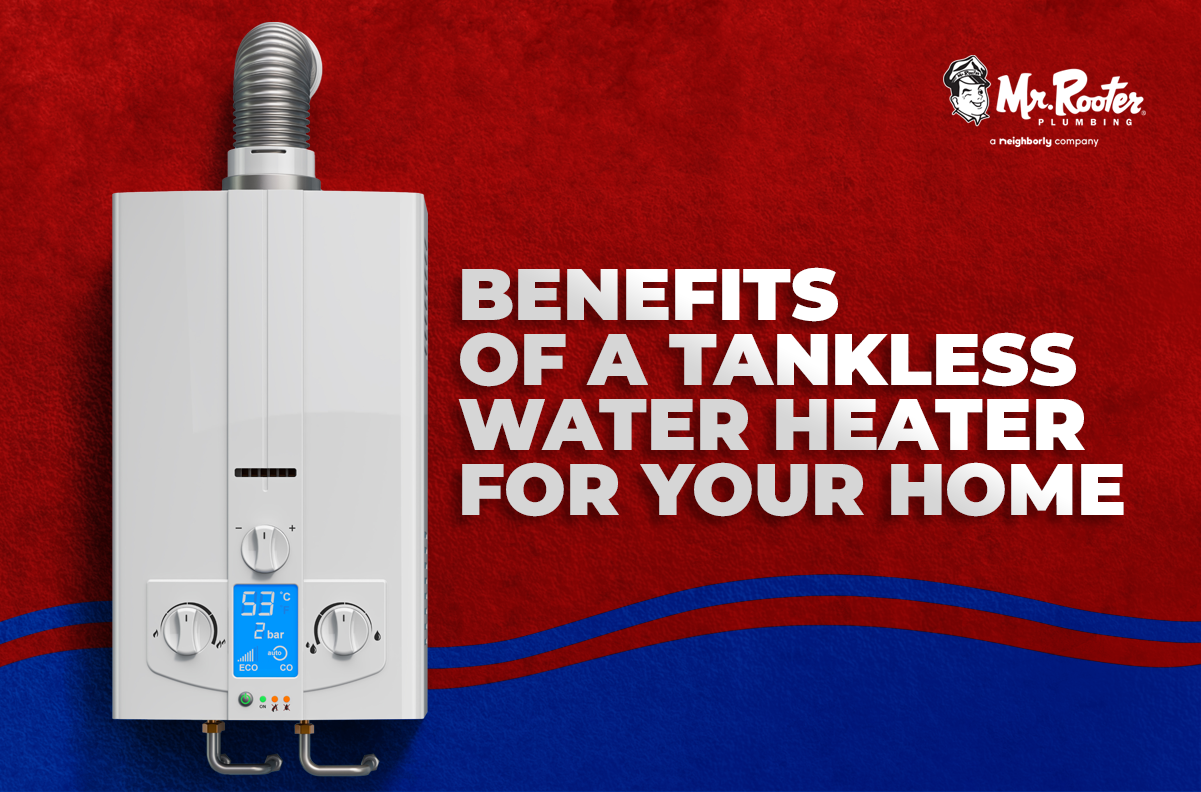
Wondering if a tankless water heater is a good fit for your home? It’s a common dilemma for many homeowners. This guide is here to help you out. We’ll break down everything you need to know about tankless water heaters From why they’re a smart choice to the nitty-gritty of potential drawbacks, we’ve got you covered.
What is a Tankless Water Heater?
Unlike traditional water heaters that store and continuously heat water in a tank, a tankless water heater operates on an on-demand basis. When you turn on the hot water tap, cold water travels through a pipe into the unit, where a gas burner or electric element heats it. This means you’re only heating water when you need it, leading to significant energy savings.
How Does it Work?
- Flow Sensors: Activate the heater when they detect water flow.
- Heat Exchanger: Instantly heats the water to a pre-set temperature.
- Output: Delivers hot water directly to your faucets or appliances.
Top Benefits of a Tankless Water Heater
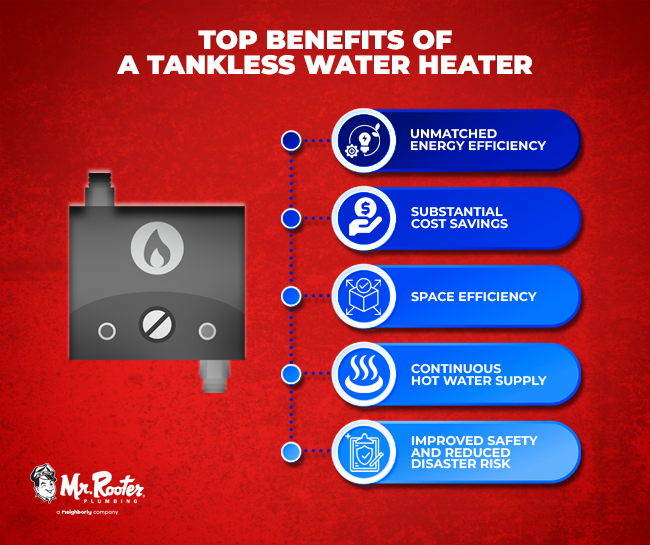
- Unmatched Energy Efficiency:
Tankless heaters can be 24%–34% more energy-efficient than traditional tanks for homes that use 41 gallons or less of hot water daily. For homes using around 86 gallons, they can be 8%–14% more efficient. This efficiency translates into significant energy bill reductions.
- Substantial Cost Savings:
While the initial cost is higher, tankless water heaters have a longer lifespan (up to 20 years or more) and lower operating costs. Over time, these savings can offset the initial investment.
- Space Efficiency:
Their compact size offers flexibility in installation locations – be it a closet, under a sink, or mounted on a wall – freeing up valuable space in your home.
- Continuous Hot Water Supply:
Say goodbye to the frustration of running out of hot water during showers. Tankless heaters provide a steady stream of hot water, making them ideal for families and continuous usage.
- Improved Safety and Reduced Disaster Risk:
Tankless heaters eliminate the risk of tank leaks and bursts, which are a concern with traditional water heaters.
💡 Upgrade your hot water system with tankless heaters – compact, energy-efficient, and providing instant hot water on demand. Ideal for modern homes, these units save space and offer continuous, efficient performance.
Addressing Common Concerns
Switching to a tankless water heater can bring up a few questions and concerns. Let’s take a moment to address some of the most common issues homeowners face:
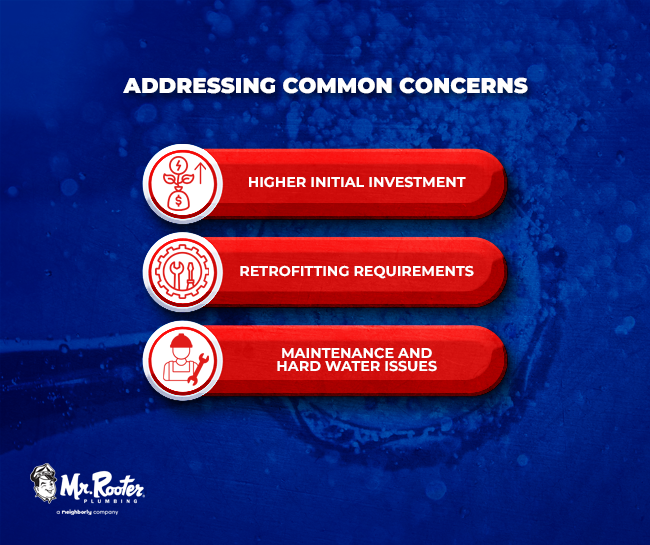
- Higher Initial Investment: The upfront cost is more than traditional heaters, but long-term energy savings can balance this out.
- Retrofitting Requirements: Installation might need updates to your home’s electrical system or gas lines, adding to the initial expense.
- Maintenance and Hard Water Issues: Regular upkeep, including descaling in areas with hard water, is crucial for maintaining efficiency and extending the unit’s lifespan.
💡 Switching to tankless? Initial costs balance with long-term savings. Upgrades may be needed, but regular maintenance ensures efficiency. Make a smart, cost-effective choice for your home upgrade!
How to Decide if a Tankless Water Heater is Right for You
Making the switch to a tankless water heater is a big decision. Here are some key factors to consider that will help you determine if it’s the right choice for your home:
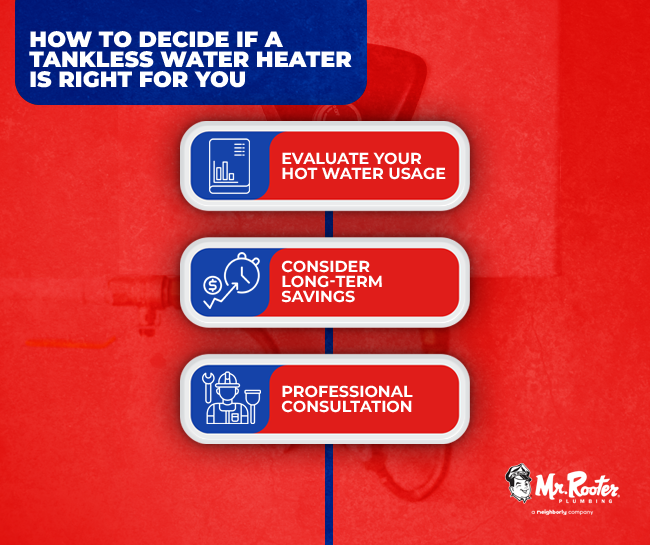
- Evaluate Your Hot Water Usage: Consider your household’s daily hot water needs. Tankless heaters are great for consistent, moderate use.
- Consider Long-Term Savings: Weigh the potential energy and cost savings against the initial cost of the unit.
- Professional Consultation: A chat with a plumbing and heating expert can give you insights specific to your home’s setup and requirements.
Tankless water heaters represent a significant leap forward in home heating technology, offering a blend of efficiency, cost-effectiveness, and convenience. While the initial investment and installation considerations are important factors, the long-term benefits often justify the switch. We encourage homeowners to weigh these factors carefully and consult with professionals to make an informed decision that aligns with their home’s needs and their lifestyle.