Are you facing corrosion issues in your home’s supply pipes? Ignoring this problem can result in more significant, costly repairs in the future. In this guide, we’ll teach you how to identify, repair, and prevent supply pipe corrosion. Don’t let a minor issue become a major headache. Discover how to maintain your plumbing, saving you both money and hassle in the long run. Let’s get started on how to fix supply pipe corrosion together!
What is Pipe Corrosion?
Pipe corrosion is a natural process where metal pipes deteriorate due to chemical reactions between the pipe material and the environment. This reaction often leads to the loss of metal, weakening the pipe structure.
Causes of Pipe Corrosion
Several factors contribute to pipe corrosion, including water pH, oxygen levels, temperature, water velocity, and the presence of chemicals in the water. External factors like soil composition and electrical currents can also accelerate corrosion.
Types of Pipe Corrosion
- Uniform Corrosion: This common form evenly reduces the pipe wall thickness, often visible as rust.
- Pitting Corrosion: Localized and creates small holes, leading to leaks.
- Galvanic Corrosion: Occurs when different metals are connected in the presence of an electrolyte, like water.
- Erosion Corrosion: Caused by high-velocity water flow, eroding the metal.
Signs of Corrosion in Pipes
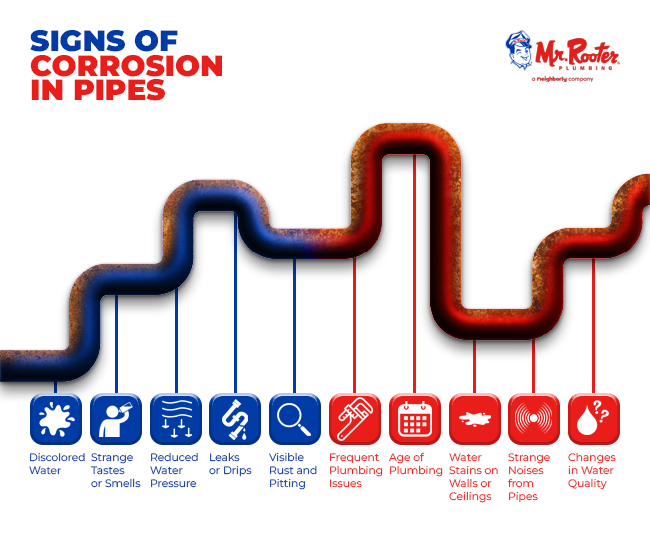
Detecting corrosion in your pipes early can save you from extensive damage and costly repairs. Here are some key signs to watch out for:
- Discolored Water: If you notice brown, red, or yellow water coming from your taps, it’s often a sign of rust and corrosion inside your pipes.
- Strange Tastes or Smells: A metallic taste or odd smell in your water can indicate corroding pipes.
- Reduced Water Pressure: Corrosion can cause buildup inside the pipes, narrowing the passage and reducing water flow, leading to lower water pressure.
- Leaks or Drips: Even small leaks or drips at pipe joints can signal corrosion. Over time, the corrosion weakens the pipe, leading to cracks and leaks.
- Visible Rust and Pitting: Examine any exposed pipes for signs of rust or small pits. These are clear indicators of surface corrosion.
- Frequent Plumbing Issues: If you’re facing recurring plumbing problems like clogs or leaks, it could be due to corroded pipes.
- Age of Plumbing: Older plumbing systems, especially those over 30 years old, are more prone to corrosion. Knowing the age of your pipes can help assess their condition.
- Water Stains on Walls or Ceilings: These can be a result of leaks from corroded pipes hidden behind walls or above ceilings.
- Strange Noises from Pipes: Banging or groaning noises can be caused by the irregular water flow due to corrosion and sediment buildup.
- Changes in Water Quality: Any noticeable change in water clarity, such as cloudiness or particles, could be due to corroding pipes.
💡Proactive detection of corrosion in pipes is your key to preventing extensive damage and costly repairs. Watch for discolored water, odd tastes, reduced pressure, leaks, visible rust, and more. Protect your property by addressing these signs early, ensuring a smooth plumbing experience for years to come.
Home Solutions to Fix Pipe Corrosion
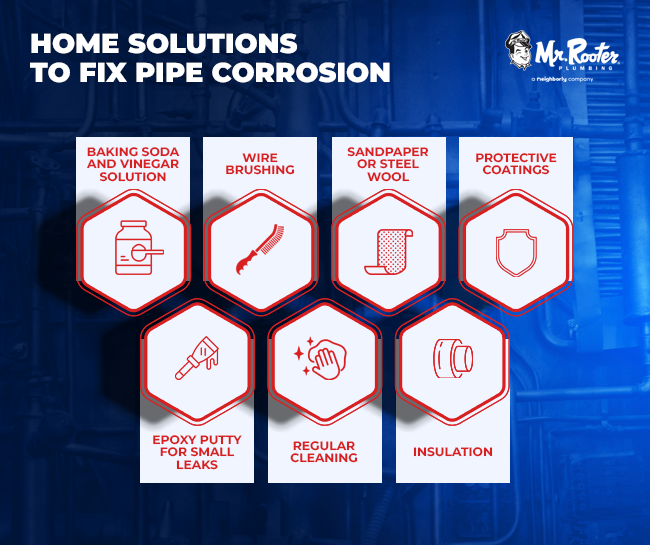
Tackling minor corrosion at home can be effective if done correctly. Here are some DIY methods:
- Baking Soda and Vinegar Solution:
Create a mixture of baking soda and vinegar, apply it to the affected area, and let it sit for a few hours. This can help loosen and remove light rust.
- Wire Brushing:
For accessible pipes with surface rust, use a wire brush to scrub off the corrosion. Be sure to wear protective gloves and goggles.
- Sandpaper or Steel Wool:
If the corrosion isn’t too deep, gently sanding the area with sandpaper or steel wool can remove the rust. Start with a coarse grade and finish with a finer one for a smooth surface.
- Protective Coatings:
Protective Coatings: After removing the rust, apply a rust inhibitor or a protective coating to prevent future corrosion. This is especially important for pipes that are exposed to moisture regularly.
- Epoxy Putty for Small Leaks:
If the corrosion has led to small leaks, epoxy putty can be a temporary fix. It’s a moldable material that hardens and seals small holes or cracks.
- Regular Cleaning:
Regularly cleaning exposed pipes can prevent the buildup of substances that cause corrosion.
- Insulation:
Insulation: Insulate pipes in areas prone to temperature fluctuations to prevent condensation, which can lead to corrosion.
💡 Remember, these DIY methods are suitable for minor corrosion issues. For extensive corrosion, it’s always best to consult with a professional plumber to assess the situation and provide a more permanent solution.
When to Consult a Professional
If you observe any of these signs, especially multiple or severe ones, it’s crucial to consult a professional plumber. They can accurately diagnose the issue and recommend the best course of action to ensure your plumbing system’s health and safety.
Preventive Maintenance Tips
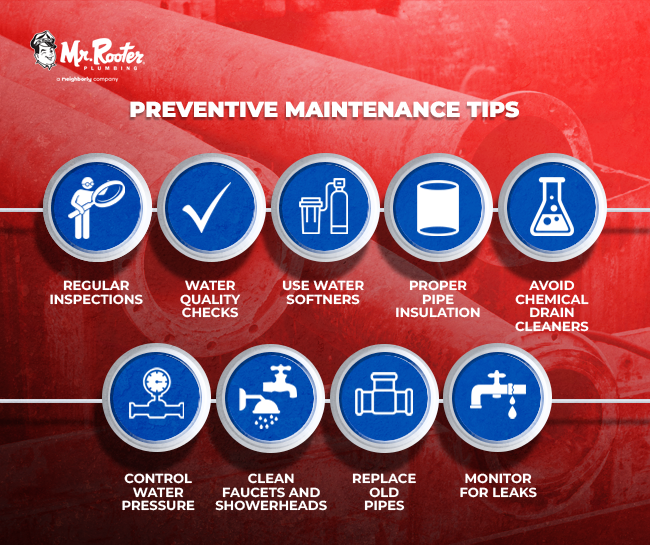
Preventive maintenance is key in the battle against pipe corrosion. Taking proactive steps not only extends the life of your plumbing but also saves you from future costly repairs. Here are essential tips to help you keep corrosion at bay:
- Regular Inspections: Schedule yearly inspections of your plumbing system to catch any early signs of corrosion.
- Water Quality Checks: Test your water regularly for pH levels and mineral content; imbalances can accelerate corrosion.
- Use Water Softeners: If you have hard water, consider installing a water softener to reduce mineral buildup in pipes.
- Proper Pipe Insulation: Insulate pipes in colder areas to prevent condensation, which can lead to corrosion.
- Avoid Chemical Drain Cleaners: Use natural alternatives instead, as harsh chemicals can speed up pipe corrosion.
- Control Water Pressure: Ensure your water pressure is not too high, as excessive pressure can cause wear and tear on pipes.
- Clean Faucets and Showerheads: Regular cleaning can prevent mineral deposits from forming and causing corrosion.
- Replace Old Pipes: Consider replacing old or worn-out pipes, especially if they are prone to corrosion.
- Monitor for Leaks: Keep an eye out for leaks and address them promptly to prevent moisture accumulation and corrosion.
Addressing supply pipe corrosion is vital for the longevity and efficiency of your plumbing system. Regular maintenance, understanding the signs, and knowing how to fix supply pipe corrosion can save you from costly repairs and ensure a safe water supply. Remember, proactive care is key to keeping your supply pipes corrosion-free.